 Nasim Akthar·1d ago

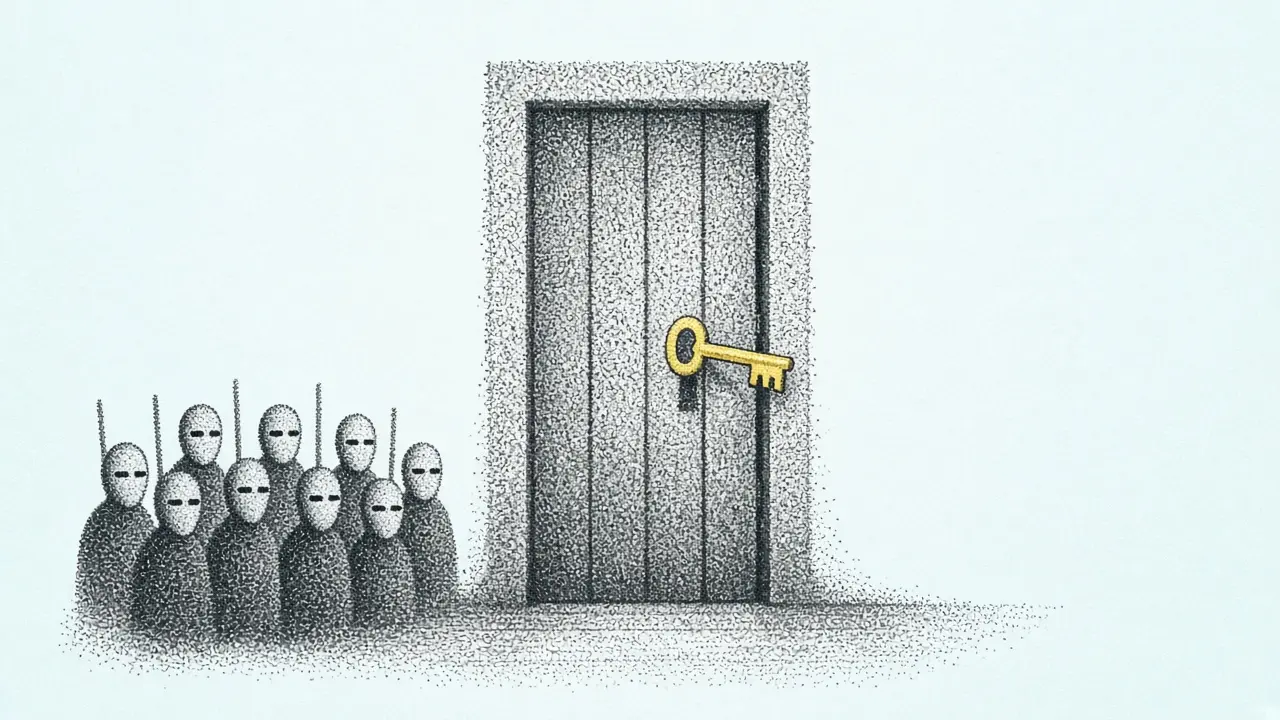
Solana co-founder Anatoly Yakovenko says AI is close to mimicking a person's identity completely, but AI cannot fake a public key. Solana put that claim in a Sunday summary of his Breakpoint 2026 remarks.
Solana posted the summary on X on November 29. It draws on Yakovenko's appearances at Breakpoint 2026 in London earlier this month. Yakovenko said traditional finance is built on identity, while a blockchain needs one thing from a user. "We just want to know your public key. And that, AI can't fake," he said.
In his telling, banks lean on identity checks that a capable model can imitate. A blockchain only asks whether the right key signed a transaction. He also covered AI and security in a Breakpoint interview with Raoul Pal, posted on November 26.
Yakovenko also called AI a superpower for building smart contracts. He said the number of bugs in code is finite and "it'll go to zero really quickly." The quotes carry no timeline and no audit figures, so the claim is a forecast, not a measured result.
A public key proves that someone controls a key. It does not prove who that someone is. Banks and exchanges must still know their customers under money laundering rules, and a key alone does not meet them. That is the gap between his pitch and regulated finance today.
Yakovenko has also flagged a related risk. In a May post on X, he wrote that the biggest risk is AI breaking post-quantum signature schemes. He added that developers do not yet know all the implementation and math flaws in those schemes. That warning covers new designs built to resist quantum computers, not the Ed25519 signatures Solana uses today. It still shows he sees AI as a possible threat to crypto security, not only a tool for safer code.
The same summary restated Solana's larger goal: a global index fund of the economy, built from a blend of productive assets. Yakovenko said Solana fees come to about half a basis point, or 0.005%, in a bull cycle. He called that small for big financial firms. "A great L1 is a cheap L1," he said.
For readers following AI and blockchain work, the claim sets a clear test. If AI keeps getting better at faking people, systems that check a signature will look stronger than systems that check a face, a voice, or a document. Whether regulators accept a key as enough proof of a customer is still open.
Related News
Explore more